Key Takeaways
- The Assistive Technology and Home Modifications (AT-HM) scheme is a dedicated funding pool within Australia’s Support at Home program that covers essential mobility equipment and physical home changes.
- AT-HM funding tiers are divided into Low (up to $500), Medium (up to $2,000), and High (up to $15,000), ensuring that one-off equipment purchases do not deplete a participant’s regular ongoing support budget.
- Aged Care home modifications and assistive technology require an official aged care assessment to determine eligibility.
- Clinical assessments by an allied health professional, such as an occupational therapist, are required to prescribe complex or high-tier equipment to ensure it is safe and appropriate.
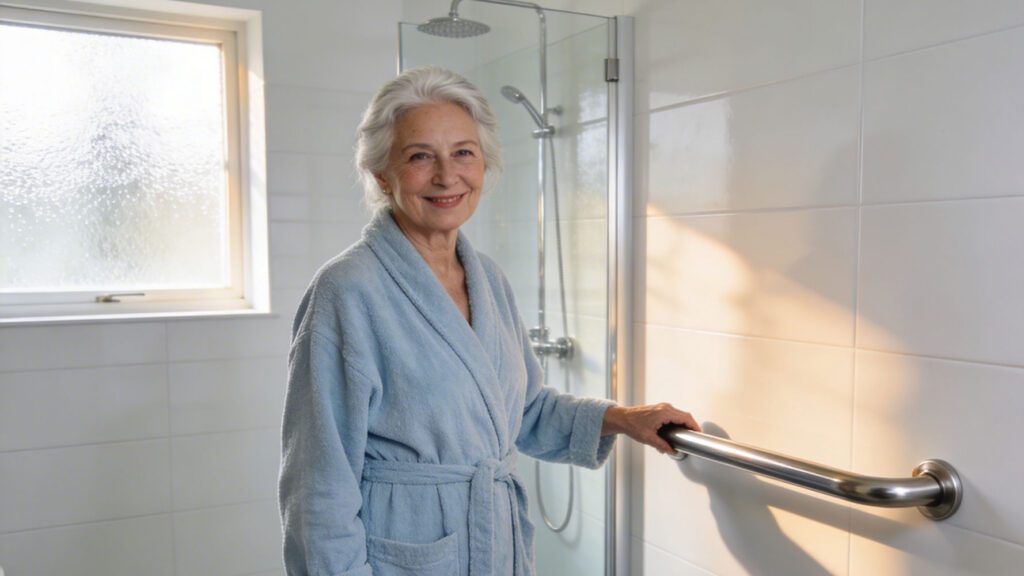
Imagine your mum confidently showering on her own because of a well-placed grab rail. Or your dad getting out into the garden again thanks to a motorised wheelchair that gives him back his freedom to move.
Small changes can make an enormous difference to an older person’s safety, confidence and quality of life. The Australian Government funds many of them through the Assistive Technology and Home Modifications (AT-HM) scheme.
This article walks you through what is covered, who qualifies and how to get funding.
What Is The Assistive Technology and Home Modifications Scheme (AT-HM)?
The AT-HM scheme sits within the Support at Home program. Support at Home launched in November 2025 as Australia’s main government-funded in-home aged care program.
AT-HM is a separate pool of funding meant just for equipment and physical home changes. Because this funding is separate, buying a safety device will not eat into your regular Support at Home budget. You can still use your regular budget for things like cleaning, personal care or transport.
Funding is available through three tiers based on your assessed needs:
- Low — up to $500
- Medium — up to $2,000
- High — up to $15,000 (or more with supporting clinical evidence)
Most people access AT-HM funding for a 12-month period, with the option to reapply. People with specific progressive conditions such as Parkinson’s disease or motor neurone disease automatically receive a 24-month access period and may apply for extensions of up to 48 months in total.
What Kind of Technology Is Actually Covered?
It is important to understand the difference between approved assistive technology and everyday consumer gadgets. The AT-HM scheme does not cover standard household expenses, entertainment tech or items funded by other government programs.
Assistive technology means items and equipment that help an older person do things more easily or safely.
Assistive technology covered by the scheme includes:
- Mobility equipment such as walking frames, walking sticks and wheelchairs
- Bathing aids including shower chairs and bath boards
- Toileting supports such as commodes and bedpans
- Modified cutlery and adaptive cutting boards for food preparation
- Communication products for people who have trouble speaking
The scheme also covers home modifications. These are physical changes to make your home safer and easier to get around.
Home modifications can include:
- Grab rails in the shower or bathroom
- Internal and external handrails
- Ramps and stair lifts
- Lever tap sets and door handles
- Bathroom redesigns for wheelchair access
Some items on the AT-HM list are simple, low-risk things you can just go out and buy. But for more complex or expensive equipment, you will need a health professional, like an occupational therapist, to recommend it first to make sure it is safe and right for you.
Who Is Eligible for The AT-HM Scheme?
Assistive technology and home modifications are not just for people with severe or complex health needs. They are designed for any older Australian whose daily safety, mobility or independence has started to decline.
You or your loved one may benefit from the AT-HM scheme if they:
- Live alone and have limited support when moving around the home
- Are managing a chronic condition such as heart disease, diabetes or arthritis
- Have experienced a fall or are at increased risk of falling
- Are in the early stages of cognitive decline or memory loss
- Have reduced grip strength, limited mobility or difficulties with bathing and personal care
- Are living with a progressive neurological condition such as Parkinson’s disease or motor neurone disease
An aged care assessor will look at your eligibility for the AT-HM scheme during your regular assessment. If any of these situations apply to your family, be sure to mention them during the assessment.

How Funding and Contributions Work
The pricing structure for AT-HM is designed to keep costs affordable. It helps to think of the process in a few clear steps: your funding approval, the clinical assessment, the training and the actual device.
First, you need an aged care assessment through My Aged Care. During this process, the assessor will decide if you are eligible for the AT-HM scheme and assign you a funding tier (Low, Medium or High).
Once your funding is approved, you will often need a specific assessment from a health professional, like an occupational therapist, to prescribe the exact equipment you need. Under Support at Home, this occupational therapy assessment is considered a clinical support. Clinical supports are fully funded by the government, meaning you pay nothing for this step.
Next, if you need help learning how to use your new device safely, that training is also classed as a clinical support and is fully funded.
Finally, there is the physical device or the home modification itself. These fall under independence services. For this part, you will usually need to pay a moderate contribution.
The exact amount you contribute depends on a means assessment by Services Australia. People on a full Age Pension will pay a lower rate than those with higher income or assets.
Ultimately, this setup means you are supported every step of the way. You receive expert advice and safe training at no cost, while only sharing a small part of the cost for the actual equipment.
Finding A Provider to Help Future-Proof Your Home
You do not have to figure out the AT-HM scheme alone. Finding a home care provider with strong allied health connections is the best way to get the right equipment installed safely.
A good provider will coordinate the clinical assessment, help you use the right funding tier and arrange the delivery or installation of the equipment.
This is where Aged Care Decisions can assist. Our service is 100% FREE and 100% independent. We match thousands of families with suitable home care providers who have current availability. We do the running around for you so you can focus on keeping your loved one safe at home.
Request an Options Report today and let our team connect you with the right providers to help your loved one stay safely at home.
Get our FREE Personalised Options Report today.
Here’s how Aged Care Decisions’ FREE aged care matching service works: