Support at Home is now helping thousands of older Australians access the help they need to live independently. But if you are new to the program or transitioning from a Home Care Package, understanding exactly what services are available (and what isn’t covered) can be confusing.
You might be wondering: Can I still get help with the garden? What about my physio appointments? And do I have to pay for it all?
This article breaks down the complete Support at Home service list in plain English, so you can make informed decisions about in-home care.

Support at Home Service Categories
To make sure funding goes exactly where it’s needed, the Support at Home program groups services into three main categories. These categories determine the type of help provided, and also how much the government contributes towards the cost.
- Clinical Care: Health services to maintain medical and physical well-being (like nursing).
- Independence Services: Support to help you or your loved one stay safe and connected (like personal care).
- Everyday Living Services: Practical help around the house (like cleaning)
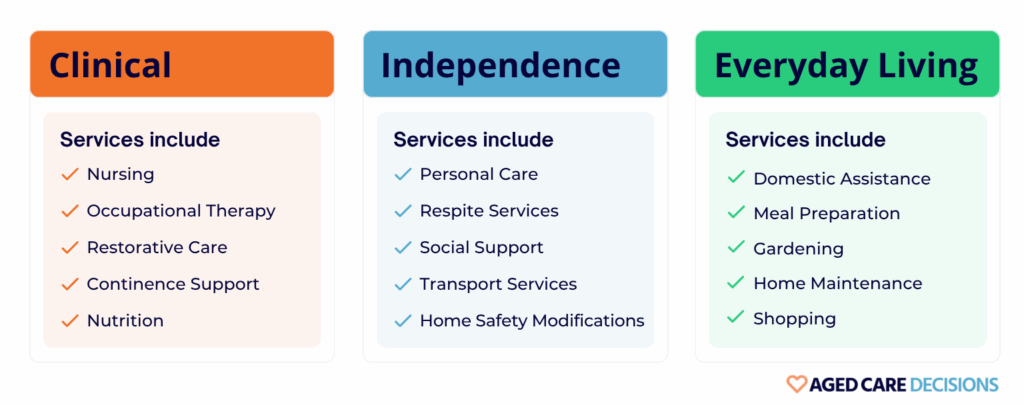
Let’s look at what fits into each category.
Support at Home Clinical Services
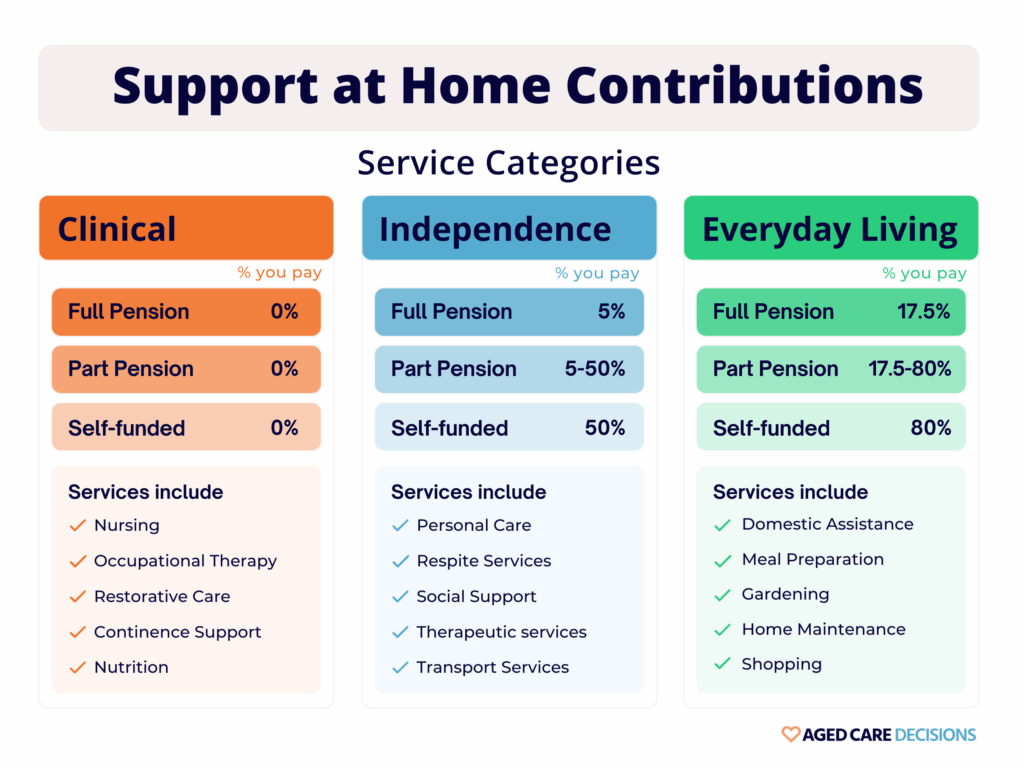
Good news: The government pays 100% of the cost for these services.
Clinical services are designed to maintain medical and physical well-being. Because these are essential health services, they are fully funded by the government. These services must be delivered by qualified health professionals like nurses or allied health practitioners.
View the full official government Support at Home service list.
Nursing Care
Community-based nursing to assess, treat and monitor health conditions at home.
What IS Covered:
- Wound care: Changing dressings and looking after skin to prevent sores or ulcers.
- Medication help: Giving injections or managing complex medication schedules.
- Health checks: Monitoring blood pressure, diabetes or heart health.
- Specialised care: Managing catheters, stomas or feeding tubes.
- Palliative care: Clinical support to maintain comfort at home during end-of-life care.
What Is NOT Covered:
- Services typically provided by a hospital.
- General personal care (like showering) unless there is a specific clinical need.
Allied Health and Other Therapeutic Services
Health services provided by allied health professionals to maintain strength, mobility and safety.
What IS Covered
- Physio & Occupational Therapy: Exercises to maintain movement and advice on home safety.
- Podiatry: Clinical foot care (essential for diabetes management).
- Speech Pathology: Assistance with swallowing or communication difficulties.
- Dietetics: Expert nutritional advice and diet planning.
- Mental health: Support from a social worker or psychologist.
What is NOT Covered:
- General gym memberships.
- Medical diagnosis (provided by a GP).
- Ambulance costs.
Nutrition
Specialised support to ensure nutritional needs are met.
What IS Covered
- Hydration: Assistance with maintaining fluid intake.
- Tube feeding: Support for enteral feeding.
- Supplements: Special dietary formulas if prescribed for weight loss or health decline.
What is NOT Covered
- The cost of the food itself (groceries).
- Vitamins and supplements that have not been prescribed by a medical professional
Care Management
Coordination ensuring services meet needs effectively. Care Managers help with budgeting and scheduling services.
What IS Covered
- Creating, reviewing and updating care plans as needs change.
- Coordinating services with different providers.
- Safety assessments and risk management in the home.
What is NOT Covered
- Administrative fees not related to direct care coordination.
Restorative Care Management
Short‑term, focused support after a setback like an illness, injury or stay in hospital. Brings a small team together to help rebuild strength and confidence at home.
What IS Covered
- Coordination of a team of professionals (nurses, therapists) to work towards clear recovery goals.
- Creating and reviewing restorative care plans for consistent outcomes.
- Organising time-limited intensive support (up to 16 weeks under Restorative Care Pathway).
- Linking in Assistive Technology or home modifications needed for recovery.
What is NOT Covered
- Ongoing, long‑term care coordination once the restorative episode finishes. That type of support falls under standard care management instead.
Support at Home Independence Services
Services supporting daily tasks and community connection. These attract a small contribution, from 5% for full pensioners up to 50% for self-funded retirees.
Personal Care
Help with everyday personal tasks and self-care needs.
What IS Covered
- Hygiene:Showering, bathing, sponge baths and personal hygiene.
- Dressing and grooming:Help with clothes, shoes and basic grooming.
- Mobility: Assistance moving around, getting in and out of bed.
- Continence: Non-clinical help changing incontinence aids or accessing supplies.
- Medication: Support with self-administration (like opening Webster packs).
What is NOT Covered
- Hairdressing, waxing or beauty treatments.
- Clinical medication administration (nursing care).
- Prescription medications (covered by Pharmaceutical Benefits Scheme – PBS)
Social Support and Community Engagement
Support to prevent isolation and keep connected with friends, family and the community.
What IS Covered
- Outings: Accompanied trips to shops, banks, or cafés.
- Groups: Transport and support to attend local clubs or seniors’ groups.
- Visits: Home visits for companionship.
- Tech help: Assistance using technology to connect with family.
What is NOT Covered
- Tickets to movies, clubs or events.
- Meals or drinks purchased during outings.
Therapeutic Services for Independent Living
Unlike clinical allied health, these services focus on maintaining current function and independence rather than treating acute conditions.
What IS Covered
- Diversional therapy: Recreation programs planned by qualified therapists.
- Remedial massage: Only when prescribed by an allied health professional.
- Group activities: Supervised exercise or recreation classes for seniors.
- Other therapies: Acupuncture, chiropractic, art therapy, osteopathy (evidence-based only).
What is NOT Covered
- Relaxation massage.
- Services already funded elsewhere (Chronic Disease Management Plan).
- Hospital, ambulance or GP services.
- Activity costs like craft supplies or tickets.
Respite
Supervision and assistance by someone other than the usual carer, delivered individually or in groups at home or in the community
What IS Covered
- In-home respite (a care worker stays with you while your carer goes out).
- Community-based respite (day centres).
- Cottage respite (short overnight stays in a community setting).
What is NOT Covered
- Permanent residential aged care.
- Residential respite funded through other programs.
Transport
Group and individual transport assistance to connect with usual activities like appointments, shopping or social outings.
What IS Covered
- Direct transport: Driver and car provided by a support worker.
- Indirect transport:Taxi or rideshare vouchers.
What NOT Covered
- Private car purchase, registration, petrol or repairs.
- Driver licence costs.
- Public transport, flights or ferries.
- Holiday travel.
- State/local government travel programs.
Assistive Technology and Home Modifications
Equipment and changes to the home to improve safety and accessibility.
What IS Covered
- Mobility aids: Items like walking frames, shower chairs, and wheelchairs.
- Safety tech: Personal alarms and monitoring systems.
- Minor modifications: Installation of grab rails, handrails, or ramps.
- Complex modifications: Bathroom changes (e.g., removing a bath) if clinically needed.
What is NOT Covered
- General household items (furniture, fridges, washing machines).
- Renovations like painting, tiling or replacing carpet purely for appearance.
- Items not on the official AT-HM Scheme list.
Learn more: What is the Assistive Technology and Home Modification at Home Scheme?
Support at Home Everyday Living Services
Practical services to help with household tasks. This category has the highest consumer contribution from 17.5% for full pensioners up to 80% for self-funded retirees
Domestic Assistance
Help keeping the home clean and liveable.
What IS Covered
- Cleaning: General house cleaning (mopping, vacuuming, washing dishes).
- Laundry: Washing, ironing, and drying clothing.
- Shopping: Accompanied or unaccompanied grocery shopping.
What is NOT Covered
- Professional cleaning (carpet cleaning, dry cleaning).
- Pet care or cleaning up after pets.
- Pest control
- Cost of groceries or purchased items
Home Maintenance and Repairs
Services to keep the home and garden safe for access.
What IS Covered
- Gardening: Lawn mowing, pruning, and clearing paths for safe access.
- Minor repairs: Cleaning gutters, replacing lightbulbs, fixing broken door handles, or other small jobs that maintain safety.
What is NOT Covered
- Professional gardening like tree removal, landscaping or water features.
- Gardening that relates to visual appeal rather than safety and accessibility, like maintaining garden beds.
- Professional repairs like pest control, installing cabinetry or replacing carpet (unless it’s an urgent safety risk).
- Work that is the responsibility of a landlord, council or insurance.
Meals
Support to ensure access to nutritious food.
What IS Covered
- Preparation: In-home meal preparation.
- Delivery: Delivery of pre-prepared meals (like Meals on Wheels).
What is NOT Covered
- The cost of the ingredients. You must pay for the food itself; the subsidy only covers the preparation and delivery cost.
- Takeaway food delivery fees
- Meals for other household members.

What Services Are Covered Under Support at Home Compared to Home Care Packages?
The types of services available under Support at Home are very similar to the Home Care Packages program, but the way they are funded has changed.
Previously, you had a single bucket of funds to use for everything. Now, services are split into the three categories (Clinical, Independence, Everyday Living) with different rules for what you pay.
Key changes include:
- Stricter Exclusions: There are tighter rules on purchasing goods. Items like smartwatches, recliner chairs or generic tablets are harder to justify unless there is a critical clinical need.
- Standardised Inclusions: The service list is now consistent across all providers, meaning “Domestic Assistance” covers the same tasks regardless of who delivers it.
How the Service List Works in Real Life
Understanding how these service categories work together is easier with practical examples. These scenarios illustrate how contributions vary depending on the type of service and your financial situation.
Mary’s services
Mary is 78, lives on a full pension, and needs help to stay independent at home.
- Clinical: A nurse visits weekly to manage her medication (Mary pays nothing).
- Independence: A support worker helps with showering twice a week and provides transport to the seniors’ club (Mary pays 5% of the cost).
- Everyday Living: A cleaner comes fortnightly to vacuum and mop (Mary pays 17.5% of the cost).
This mix allows Mary to affordably access the specific help she needs, with the government covering most costs.
John’s services
John is 72, a part-pensioner who owns his home, and needs regular support to manage at home.
- Clinical: A physiotherapist visits monthly for fall prevention exercises (John pays nothing).
- Independence: A support worker assists with personal care three times a week and provides transport to medical appointments (John pays 27.5% of the cost).
- Everyday Living: Meals on wheels are delivered daily, and a gardener comes monthly (John pays 48.75% of the cost).
As a part-pensioner, John contributes more than Mary but still receives substantial government support for his care needs.
Lillian’s services
Lillian is 80, a self-funded retiree with her own income and assets.
- Clinical: A podiatrist visits every six weeks to treat a foot condition (Sarah pays nothing).
- Independence: A driver takes her to the shops and library weekly (Sarah pays 50% of the cost).
- Everyday Living: A gardener mows her lawns and maintains the yard every fortnight (Sarah pays 80% of the cost).
Even though Lillian pays a higher contribution for daily tasks, the government still fully funds her clinical needs and subsidises half of her independence support
Do you have to pay for Support at Home services?
Most people will contribute to the cost of their non-clinical care, but Clinical Care (like nursing) is always 100% government-funded ($0 cost to you).
For other services, your contribution depends on your income and assets:
- Independence Services (e.g., showering, transport): You pay 5% – 50% of the cost.
- Everyday Living (e.g., cleaning, gardening): You pay 17.5% – 80% of the cost.
Protections in place:
- Lifetime Cap: Your contributions are capped at a maximum limit over your lifetime.
- Grandfathering: If you had a Home Care Package before 12 September 2024, you won’t pay more than you did under the old system.
Find out the current caps and learn more about Support at Home fees.
Receive Personalised Guidance for Your Support at Home Services
Finding the right support shouldn’t be overwhelming.
Aged Care Decisions provides a 100% free and independent service to make the process simple. We can:
- Clarify which service categories apply to your situation.
- Match you with available local providers who offer the specific services you need.
- Help you compare fees, availability, and inclusions.
Our specialists are ready to help you connect with a provider who fits your care needs.