Key Takeaways
Groceries are not covered: Support at Home funding pays for meal preparation or meal delivery under the Everyday Living category, but it does not cover the cost of the food or ingredients.
Understand the cost differences: In-home meal preparation is charged at a higher hourly rate, whereas meal delivery is billed per meal, making delivery a much more economical option for your care budget.
Mix and match your services: You can combine regular meal deliveries for weekdays with occasional in-home cooking visits to stretch your budget while still enjoying fresh meals and social interaction.
Review your care plan: If your meal needs change or your budget feels tight, compare your provider’s pricing and adjust your services to better suit your daily routine.

Picture this. Your mum’s support worker arrives, puts the kettle on, chops a few vegetables and has a warm meal on the table within the hour. Or alternatively, a ready-made meal arrives at the door in a neat little container, straight into the microwave, done in three minutes. Both are valid. Both can be funded. But which one is actually giving your family better value?
If you are trying to make your Support at Home budget stretch further, how you fund meals is worth a closer look. This guide explains how each option works, what the real differences are and how to figure out the right balance for your loved one.
How Meals Are Funded Under Support at Home
Both meal preparation and meal delivery (meals on wheels) can be funded through the Support at Home program. They sit within the Everyday Living service category, which covers practical, day-to-day support that helps older Australians stay comfortable and independent at home.
The cost of groceries and ingredients is not covered, regardless of which option you choose. Your funding pays for the cooking or the delivery, not the food itself.
How much you contribute toward meal services will depend on your income, assets and pension status. Everyday Living services attract the highest participant contribution rates under the program, so it is worth understanding what you are likely to pay before making any changes to your plan.
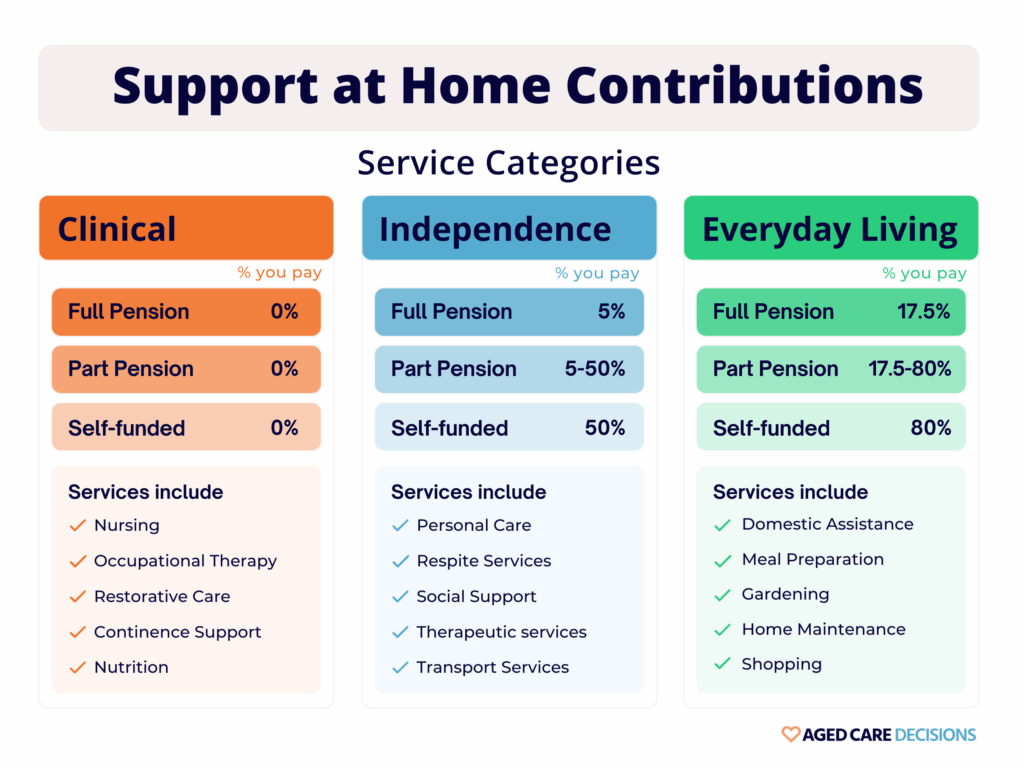
Our guide to Support at Home costs and contributions explains this in more detail.
When are Meal Services Approved?
Meal services are not automatically included in every Support at Home plan. They are usually approved when there is a clear, assessed need and when this support helps you stay safe, well-nourished and independent at home.
That might be the case if you are finding it harder to stand for long periods or cooking has become difficult. It can also cover practical help with peeling, chopping and preparing food in ways that suit your cultural, religious or health needs.
If things have changed since your last assessment, it is worth checking whether your current plan still reflects what you actually need. This matters especially when meals are getting harder to manage, or when other services are starting to squeeze your available budget.
If your needs have changed, our guide to Support Plan Reviews explains how to request one.

What Does In-Home Meal Preparation Really Cost?
If your care plan uses your ‘meals’ funding for in-home preparation, a support worker is usually billed at an hourly rate for their time
Across many providers, rates commonly sit in the $95 to $105 per hour range, although this can vary depending on your provider and location.
Visits are often scheduled for around two hours, allowing time for preparation, cooking and cleaning up. In practice, this means a single visit may use approximately $190 to $210 from your quarterly budget.
For people working within a mid‑level budget, this can use a noticeable portion of available funding over time.
That said, in-home cooking can also offer added benefits for those who value them, such as:
- Fresh meals prepared to personal preferences
- Flexibility to adjust meals on the day
- One on one time with a support worker while tasks are completed
For some people, this combination of practical help and shared time is an important part of remaining comfortable at home.
How Meal Delivery Compares on Cost
Meal delivery services are usually charged on a per-meal basis and typically cost between $11 and $22 per meal. Of course, pricing will depend on the provider and meal type.
So, five delivered meals may use around $75 from your care budget. This pricing structure can make meals on wheels a more economical way to cover regular nutrition needs.
Most providers now offer meals suited to a range of dietary requirements, including:
- Low-sodium options
- Diabetic friendly meals
- Texture modified and pureed meals
While meals are prepared in advance, there is generally still a reasonable level of choice and flexibility.
Comparing Your Options at a Glance
Feature | In-Home Meal Preparation | Meal Delivery |
Billing | Hourly rate | Per meal |
Budget impact | Higher per visit | Lower per meal |
Flexibility | High, cooked to your preferences | Moderate, set menu options |
Social interaction | Regular and meaningful | Minimal |
Best suited for | Those who value companionship and fresh cooking | Those looking to stretch their budget |
The Approach Many Families Find Works Best
You don’t have to choose just one option. Many families use a mix of meal preparation and meals on wheels to strike the right balance.
A common approach is to:
- Use meal delivery for most weekday meals
- Schedule one shorter visit for light assistance or support tasks
- Book occasional cooking visits when freshly prepared meals are important
This approach can help you:
- Stretch your Everyday Living budget further
- Maintain regular personal support where it’s helpful
- Keep funding for higher cost services such as nursing or allied health
The aim isn’t to cut services, but to use the right type of support at the right time. For more practical ideas, read our guide to 5 Smart Ways to Stretch Your Support at Home Budget.
What To Do Next
Choosing the right type of meal support will depend on your needs, budget and what matters most in your day‑to‑day routine. Even small adjustments can sometimes free up funding for other care.
- Check how much of your budget is currently spent on meal-related services
- Ask your provider for both hourly rates and per-meal pricing
- Compare how many meals you receive for the same spend
- Review your care plan to see where adjustments could help
If your budget feels tight, it may also be worth requesting a Support Plan Review through My Aged Care.
How Aged Care Decisions Can Help
Comparing providers, pricing and availability can take time, so let us do the hard work for you.
Aged Care Decisions can help you understand your local options, compare services, and see what may be available based on your needs and budget, so you can make informed choices at your own pace.
Our no-obligation service is completely free and unbiased. Contact us to receive your tailored Options Report now.
Get our FREE Personalised Options Report today.

Here’s how Aged Care Decisions’ FREE aged care matching service works: