Key Takeaways
Support at Home funding can pay for nursing and clinical care rather than just cleaning or gardening
Clinical services available at home include wound care, medication support, dementia care and chronic disease management
A change in health needs does not automatically require a move into residential aged care
Access to these clinical services depends on your Support at Home funding classification and provider capability
Finding a home care provider equipped with a strong clinical team is the best way to manage complex care at home
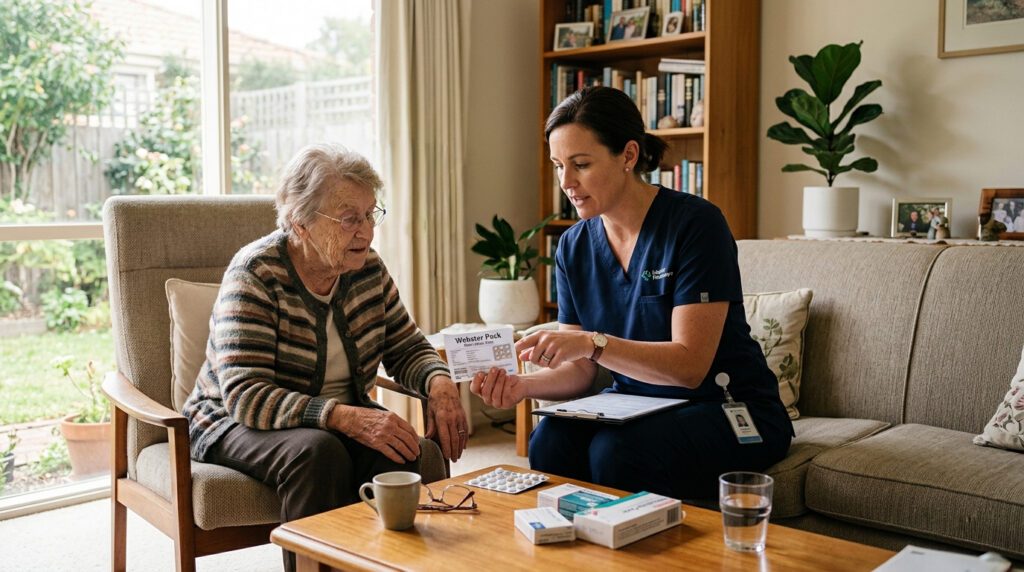
If your parent’s health needs have recently changed, you may be asking a question that’s hard to say out loud:
Can they still stay home or is it time to look at residential care?
For some families, this question arrives earlier than expected. A fall, a hospital stay or a gradual decline in memory can shift things from we’re managing to genuinely uncertain, fast.
What often gets missed in these moments is that Support at Home (SAH) funding can be used for qualified nursing and clinical care, not just help around the house.
That distinction matters because increased medical needs don’t automatically mean a move into residential care. In many cases, it simply means adjusting the type of support your parent is receiving and making sure the right provider is delivering it.
What Does Clinical Support at Home Actually Look Like?
Most families first access Support at Home through practical, everyday services like cleaning, meals and transport.
For a while, that may be enough but care needs rarely stay the same. As health changes, the type of support often needs to shift from household help and personal care toward clinical services delivered by trained health professionals.
This can include:
- Registered nurses overseeing and coordinating care
- Allied health professionals supporting mobility and function
- Structured care plans that adapt as conditions change
This is where many families notice a gap. Support is in place, but it wasn’t designed for what’s happening now.
It’s also where an important mindset shift happens: the question isn’t simply home vs. residential care. It’s whether the care at home is appropriate for the level of need.
What Nursing Services Are Covered Under Support At Home?
The range of clinical services available is broader than most people expect.
Depending on your funding classification and provider capability, Support at Home can cover:
- Wound care and dressing changes — ongoing management of surgical wounds, pressure sores or injuries
- Medication management — ensuring medications are taken correctly at the right times and in the right doses
- Chronic disease monitoring — support for conditions like diabetes, heart disease and COPD
- Dementia and cognitive support — structured approaches to managing memory loss and behavioural changes
- Continence management — clinical support that improves comfort, hygiene and dignity
- Post-hospital care — short-term clinical support after discharge to reduce the risk of readmission
- Palliative and end-of-life care — comfort-focused care delivered in familiar surroundings
Two things often catch families off guard:
- Being eligible doesn’t guarantee access — it depends on who your provider is
- Not all providers are equipped to deliver clinical care — some focus mainly on domestic and personal support, while others are structured to deliver higher-level nurse-led services
That difference becomes critical as needs increase.

Can Chronic Conditions Really Be Managed at Home?
Yes, in many cases and more effectively than families expect.
A change in health status often creates pressure to make quick decisions. It can feel like you’re running out of safe options, especially after recent incidents like falls, medication issues or repeat hospital visits.
With the right clinical support in place, many chronic conditions can be actively managed at home. Consider this common scenario:
Larry is 81, lives alone in Geelong, and has been managing diabetes and reduced mobility for several years. Recently, he’s been struggling to keep on top of his medications and his family has noticed he’s moving around the house less confidently.
Without additional support, this kind of gradual decline can lead to repeated hospital visits or an earlier-than-necessary move into residential care.
With clinical care at home, Larry’s situation looks quite different:
- His blood sugar levels are monitored regularly by a visiting nurse
- His medications are managed correctly and on schedule
- A physiotherapist supports his mobility and builds his strength
- An occupational therapist assesses his home to reduce his fall risk
Larry’s diabetes hasn’t gone away, but it’s being actively managed. He’s staying in the home he knows, with his independence intact.
How Do You Find a Provider with Strong Clinical Capability?
This is one of the most important decisions you’ll make and one of the least transparent parts of the system.
On the surface, many providers look similar. But their ability to deliver clinical care can vary significantly.
If your parent’s situation involves (or is likely to involve) medical complexity, look closely at:
- Whether registered nurses are part of the core team, not just external referrals
- The provider’s experience managing higher-level or complex care needs
- Access to allied health services like physiotherapy and occupational therapy
- Clear clinical governance and care planning processes
It’s also worth thinking ahead. A good question to ask any provider is:
“If care needs increase over the next 6 to 12 months, can you continue supporting us?”
One of the most disruptive things for families is having to change providers during a period of decline. Choosing a provider with clinical depth early can help you avoid that.
Are You Making The Most of Your Existing Funding?
If your parent already has Support at Home funding in place, it’s worth reviewing how it’s actually being used, especially if their health needs have changed.
It’s fairly common for services to stay the same even when circumstances don’t.
To get more value from your funding:
- Reassess priorities regularly — what mattered six months ago may not be the priority now
- Shift budget toward clinical services when needed — particularly where there are health or safety risks
- Choose a provider who can scale care — so you don’t outgrow the support you’ve put in place
This isn’t about adding more services for the sake of it. It’s about making sure what’s in place actually matches the current level of need and helps prevent avoidable setbacks.
You May Not Need to Move Into Residential Care
When care needs increase, it’s natural to assume that residential aged care is the next step.
Sometimes it is. But often it’s not the only option and not the immediate one.
With the right provider and the right use of nursing and clinical support at home, many families are able to manage complex needs safely in a home environment. That can mean more independence and less disruption during an already difficult time.
The key is understanding what’s genuinely possible and making decisions based on that, rather than assumptions.
Need Help Finding a Provider With Real Clinical Capability?
If your parent needs wound care, medication management or dementia support, the choice of provider matters.
Aged Care Decisions can match you with local providers who employ registered nurses and clinical specialists and who are equipped to handle more complex care at home.
Our service is 100% free for families and there’s no obligation to choose any of the providers we recommend. We’re independent, which means our only job is to find the right fit for your situation.
Get your FREE Aged Care Provider Options Report today.

Here’s how Aged Care Decisions’ FREE aged care matching service works: