Finding an Aged Care Home is one of the most emotional decisions a family can make. Many families find themselves asking: “Will staff actually have time for Mum?” or “Will there be a nurse around when Dad needs one?”
The good news is that the government is rolling out new rules to help answer that question with more certainty. From April 2026, there will be clearer checks in place to show that homes are delivering the hands-on care they’re funded for, giving families real peace of mind.
This article sets out in simple terms what these changes mean for you, and how they can help you find a home where your loved one will be safe, supported, and cared for.

What are Care Minutes?
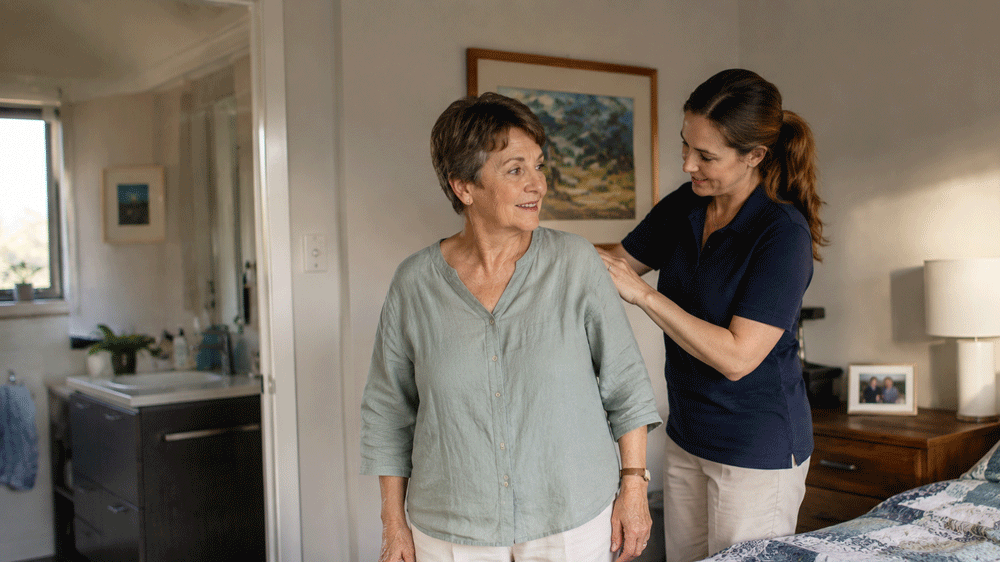
Care minutes are simply a way of counting how much hands-on time residents receive from nurses and carers every day.
That time might include:
- Help with getting out of bed, showering and dressing.
- Giving medications and checking blood pressure or blood sugar.
- Supporting someone to walk safely, use a walking frame or transfer from bed to chair.
- Helping at mealtimes, especially if a person needs encouragement or assistance to eat.
- Checking on pain, changes in mood or early signs of infection or confusion.
The national average target is 215 minutes of care per resident per day, with at least 44 of those minutes delivered by a Registered Nurse. Some residents will need more time and some less, depending on their health and care needs, but this average sets a clear baseline so homes know what they must staff for.
For more information on standard services read our guide: Understanding What’s Included in Residential Aged Care
New Residential Aged Care Funding Rules
From 1 October 2025, the government increased the daily funding for residential aged care to $295.64 per resident per day. This was partly to help homes cover higher wages for nurses and care workers so they can attract and keep staff.
But from April 2026, there’s a new “prove it” step. Homes in metropolitan areas will only keep receiving this higher funding if they can show they’re actually delivering the required care minutes.
How Care Minute Rules Keep Aged Care Homes Accountable
Starting in April 2026, the government is linking a portion of a home’s funding directly to how well it meets its care minute targets.
Here’s what that means:
- Homes must report their actual care hours each quarter.
- If they meet or exceed their targets, they keep receiving the full funding.
- If they fall short, they may receive less funding.
This creates a strong incentive for homes to keep staffing levels up and gives you more confidence that the home you choose is delivering what it’s funded for.
How are Care Minutes Counted?
Care minutes include time spent on:
- Clinical care (medication, wound care, assessments).
- Personal care (showering, dressing, toileting, meals).
- Mobility support (helping residents move safely).
- Social and emotional support (talking, reassuring, engaging with residents, especially those with dementia).
A small amount of time spent on care planning and talking with families about care can also count, but the focus is on direct, hands‑on care with residents.
Because targets are set as an average across all residents, some people may receive more care time, and others may receive less, depending on their own needs.

How to tell If an Aged Care Home is well-staffed
You don’t need to be an auditor to know if a home is delivering good care.
Just ask the question
The simplest way to check is to have a conversation. When you are touring a home or visiting a loved one, it is perfectly okay to ask the Manager: “How often does this facility meet its care minute targets?”
While they aren’t required to hand over their rosters, a good provider will be happy to answer this openly. A confident, transparent answer is usually a great sign of a healthy culture.
For other important things to check, read our guide on questions to ask when choosing an aged care facility.
Look for consistent reporting
High-performing homes are proud of their staffing levels. They often share their compliance results in newsletters or on noticeboards, rather than hiding them away in complex reports.
Check the official record
You can also view the data online. Every facility’s reported care minutes are published on the My Aged Care website, giving you a clear picture of how they track against their targets for Registered Nurses and total care time.
What if my home seems short-staffed?
In some parts of Australia, especially regional and remote areas, it can take time for aged care homes to find and keep enough qualified staff. The government is working with providers to support recruitment and training, while still expecting homes to meet their care minute responsibilities over time.
If you notice longer wait times or delays, the best approach is to start an open conversation to find out what’s going on.
Book a time with leadership
Rather than raising concerns with busy floor staff, book a short meeting with the Facility Manager or Director of Nursing. They have the full picture of the roster and can explain exactly what is happening that day.
Ask about the plan
Most providers are working hard to fill gaps. Ask them: “What is the plan to cover these shifts?”
They might explain that they are actively recruiting or bringing in temporary agency staff to help out. You can also ask to see recent reports to understand if this is a one-off issue or something more regular
Know your options
In most cases, a good chat clears things up. However, if you are still concerned about your loved one’s safety, you always have the right to contact the Aged Care Quality and Safety Commission for extra support.
We can help you find the right home
Making this decision is emotional and it’s the last thing you want to worry about when you’re handling the move of a loved one.
This is where Aged Care Decisions can help. We’re Australia’s largest free aged care placement service and we work with families every day to find residential care homes that match their needs, budget and location.
We’re Australia’s largest free aged care placement service, and we work with families every day to find residential care homes that match their needs, budget and location.
Our Aged Care Specialists will:
- Talk to you about your loved one’s care needs, preferences and budget.
- Use our live database of vacancies to find homes that are currently accepting new residents and that suit your situation.
- Send you a personalised Aged Care Options Report, so you can shortlist and tour only the ones that are a good fit.
We can also help you understand how fees work and book tours of Aged Care Homes.
Ready to find an Aged Care Home?
Our service is 100% free and independent. We can create a personalised shortlist of aged care homes that match your specific care needs and preferences.

Here’s how Aged Care Decisions’ FREE aged care matching service works: