From 1 October 2026, the Australian Government will fully fund personal care services under Support at Home. Showering, dressing and continence care will move from the independence category to clinical care. If personal care is in your support plan and you have available funding, there will be no out-of-pocket contributions for these services. Fees still apply for cleaning, transport and other non-clinical care. No new assessment is needed.
Key Takeaways
- From 1 October 2026, personal care under Support at Home moves into the Clinical supports category and becomes fully government funded.
- This applies automatically if personal care is approved in your support plan and you have available funding.
- You will no longer pay out-of-pocket contributions for showering, dressing and continence support.
- Participant contributions still apply for Everyday living services and other Independence services like transport.
- This change is for Support at Home participants only, not the Commonwealth Home Support Programme (CHSP).
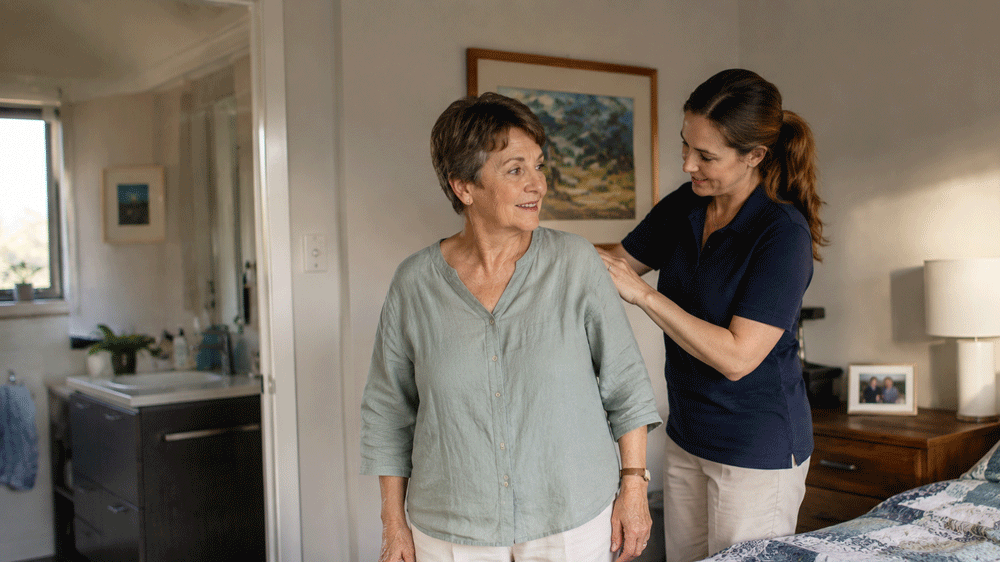
We know that managing aged care costs can feel like a constant balancing act for families. So when the government announces a change that actually saves you money, it is a welcome relief. From 1 October 2026, essential personal care services under the Support at Home program will be fully funded. This means you or your loved one will no longer have to pay out of pocket for daily help like showering and dressing, making it easier to afford the care needed to stay safely at home
What Changes From 1 October 2026?
Personal care will move from the Support at Home Independence contribution category to Clinical supports from 1 October 2026.
This removes the means-tested participant fee for these essential daily tasks, making day-to-day support more affordable for older Australians.
You can read more about why the government made this change to personal care funding in our earlier policy update.
Which Personal Care Services Will Be Fully Funded?
If you or a loved one needs help with your daily routine, a range of essential tasks will be fully covered. From 1 October 2026, the government will fund:
- Showering and bathing
- Dressing and undressing
- Continence support and toileting assistance
- Help with eating and keeping up with personal hygiene
- Assistance with taking daily medications
Keep in mind that this change applies specifically to personal care tasks. Other types of household help will still require a contribution.
Do We Need to Have a New Assessment?
No, you do not need a new aged care assessment. If you have already been approved for personal care and have available funding in your Support at Home budget, the new funding rules will apply automatically.
You will not need to fill out any new forms to receive this benefit. Your care plan continues as normal, and your home care provider will simply update how they bill you for these services.
What About Other Services Like Respite or Cleaning?
You will still need to pay means-tested contributions for other services.
Support at Home splits services into three categories and only Clinical care is fully funded. If you want more detail, read our guide on understanding Support at Home fees and contributions.
The table below shows how different services are charged from October 2026.
Service Type | Examples | Your Contribution |
Clinical supports | Nursing, allied health and personal care from 1 October 2026 | No contribution |
Independence services | Transport, social support and some assistive supports | Moderate means-tested contribution |
Everyday living services | Cleaning, gardening and meal preparation | Higher means-tested contribution |
Source: My Aged Care, accessed May 2026.
A lifetime cap on contributions still applies across Support at Home and residential aged care.
What Should Families Check with Their Provider?
It is always a good idea to check how billing changes affect your specific package. Here are three practical steps to take:
- Confirm your support plan: Check with your provider that personal care is officially included in your current plan.
- Ask about other fees: Clarify exactly what you will still pay for other services.
- Review your October invoice: Ensure personal care no longer appears as a participant contribution for services delivered from 1 October.
If you are unsure whether your current provider is still the right fit, you may also find it helpful to read our guide on choosing a Support at Home provider.
How This Fits into the Bigger Aged Care Reform Changes
Support at Home replaced the Home Care Packages program in November 2025. The program uses specific service categories to determine what the government pays for and what participants contribute.
The Commonwealth Home Support Programme (CHSP) is not moving to Support at Home until at least July 2027. This means the October 2026 change only applies to Support at Home participants. Read our guide to understand the differences between CHSP and Support at Home.
Need Help Understanding the Changes?
Understanding which Support at Home fees apply to your situation is not always simple. Our Aged Care Specialists are here to help.
Aged Care Decisions is 100% free and independent. We take the time to understand your care needs, location and budget, then match you with Support at Home providers that fit your situation. We do the legwork so you can focus on what matters most.
Get your FREE Aged Care Provider Options Report today.
FAQs
When does personal care become fully funded under Support at Home?
Personal care becomes fully funded from 1 October 2026. From that date, approved participants with available SAH funding will not pay a participant contribution for eligible personal care services.
What personal care tasks are included?
The listed services include showering, dressing, continence support, eating assistance, personal hygiene and help with self-administration of medication. These are the services the government has identified as personal care for this funding change.
Do I need a new assessment?
No, you will not need a new assessment. My Aged Care has confirmed that eligibility criteria are not changing, so if you are already approved for personal care in your support plan, the change will apply automatically from October 2026.
Will cleaning, gardening or transport also be fully funded?
No. Only personal care is moving to the fully funded Clinical category. You will still pay a participant contribution for Everyday Living services (like cleaning and gardening) and the remaining Independence services (like transport and social support).
What if I cannot afford my other Support at Home fees?
Financial assistance is available if cost is a concern for other services. You can apply for financial hardship assistance to reduce or waive contributions if you are eligible.
Here’s how Aged Care Decisions’ FREE aged care matching service works: