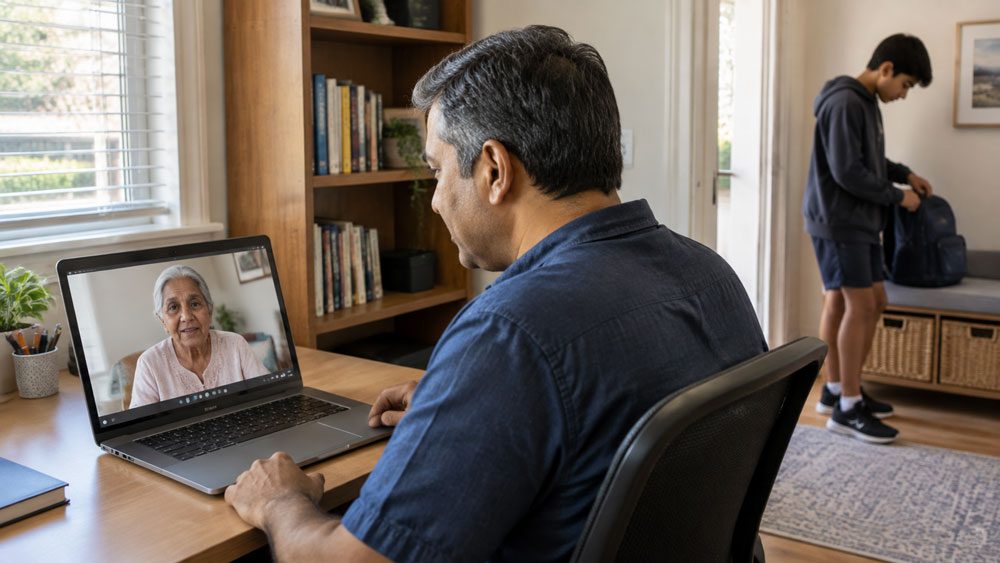
When one partner moves into an aged care home, the partner staying at home keeps their Support at Home funding without any interruption. Care is assessed and funded individually, so one person’s move does not affect the other’s services. Services Australia will also recognise you as an illness separated couple, which means each partner receives the higher single rate of the Age Pension and the family home is generally protected in the assets assessment.
Key Takeaways
Here are the most important facts to understand when managing split care pathways:
- Support at Home funding stays with the partner remaining at home and is not affected by the other partner moving to residential care.
- An “illness separated couple” assessment by Services Australia can increase the Age Pension rate for both partners.
- Your combined income and assets are still assessed, but the family home is generally exempt from the residential aged care assets test while a spouse continues to live there.
- You can use the at-home partner’s Support at Home budget for transport to visit the residential care home.
- You can apply for a Support Plan Review to increase the at-home partner’s funding if they need more help managing the house alone.


Choosing different care pathways for a couple is a significant decision. When one partner needs residential aged care and the other plans to stay at home, your Support at Home and Aged Care funding, Age Pension and household finances all need to be considered. This guide walks you through what changes, what stays the same and what to do next.
Can One Partner Stay on Support at Home?
Yes. Support at Home is an individual program. If your partner’s care needs increase to the point where residential care is the safest option, you will continue to receive your Support at Home budget without interruption.
Your partner will need a new Comprehensive Assessment to approve their transition to an aged care home. Once they accept a place, their Support at Home services (if they had them) will cease, and their funding will shift to the residential care system. Your own services and funding are not affected by this change, you simply continue as you were.
If both partners are still living at home, Support at Home for couples article explains how funding, assessments and services can work when both people need support.
What Happens to Income and Asset Assessments?
When one partner enters residential care, Services Australia understands that running two households is more expensive. They officially classify you as an “illness separated couple.”
You will both be paid the higher single rate of the Age Pension, even though you are still legally treated as a couple for the income and assets assessment. If you own your home, it will be completely exempt from the residential aged care assets test for as long as you continue to live there. It is worth contacting Services Australia on 1800 227 475 to make sure your records are updated promptly so you receive the right rate as soon as possible.
Video Transcript
What should couples consider when moving into residential aged care?
If a couple is moving into a residential aged care facility, what type of things should they consider or think about?
Rachel Lane:
If a couple is moving into a residential aged care facility, what type of things should they consider or think about?
Yeah, so couples moving into aged care should just be twice as hard.
It’s actually three times as hard as a single person moving into aged care because you have a timing question.
So, whether or not one person will move in before the other or both people will move in on the same day.
And that can have huge implications for the means test.
And in fact, the first person to move in can qualify in many cases as a low means resident because the other person who’s in the home is exempting it from them.
It’s really something that people should be getting advice about because it is a decision that depending which way you do it, there can be hundreds of thousands of dollars of difference.
Using Support at Home to Prepare for the Move
The weeks before your partner moves into an aged care home are often filled with appointments, decisions and admin. The right Support at Home services can take some of the practical pressure off during this time.
If you have a Support at Home package, your everyday living budget can cover domestic assistance and gardening while you focus on supporting your partner’s transition. If your partner’s needs have increased but the timing is not yet right, they may also be able to access the Restorative Care Pathway to safely manage at home while you find the right aged care home. If you are reviewing services with your provider, it may also help to understand Support at Home service agreements and fees.

Planning for “Living Apart Together”
Just because you are living in different places does not mean the connection changes. With the right support in place, many couples find a rhythm that works well for both of them.
You can use your Support at Home funding for transport services, making it straightforward to visit your partner regularly without relying on family or worrying about driving. Keeping your domestic assistance and social support services in place is also important. Living alone for the first time in many years is a genuine adjustment, and your Support at Home provider can help you stay connected and comfortable at home.
Financial Safeguards and Hardship Protections
The government has safeguards in place to make sure you are not left in a difficult financial position when care needs change.
If managing the costs of your household alongside your partner’s residential care fees becomes difficult, you can apply for financial hardship assistance through Services Australia. If your partner is moving from a Transitioned Home Care Package into residential care, they are also protected by “no worse off” principles (NWOP), which means their contribution rates will remain fair throughout the transition. Before making decisions about the family home or assets, it is a good idea to speak with a financial adviser who specialises in aged care and understand how aged care fees may apply to your situation.
Take the Uncertainty Out of Choosing Care
When one partner needs residential care and the other is staying at home, there are often two decisions to make at once. Aged Care Decisions can help you compare Support at Home providers for yourself and aged care homes for your partner, with free and independent support that makes the next step clearer.
Get your FREE Aged Care Provider Options Report today.

FAQs
Will my Support at Home funding stop when my partner moves into residential care?
No. Your Support at Home funding is yours individually and continues regardless of any changes to your partner’s care situation. The two programs operate completely separately.
Does my partner lose their Support at Home services when they enter residential care?
Yes. Once your partner starts receiving residential care, their Support at Home services will cease. Their care needs will be met through the residential care system from that point forward.
Will we still be assessed as a couple for financial purposes?
Yes. Services Australia will still look at your combined income and assets and split them equally. However, you will both be paid the higher single rate of the Age Pension as an illness separated couple.
Is the family home included in my partner's residential care assets assessment?
No. As long as you continue to live in the family home, it is fully exempt from the residential aged care assets test.
Can I use my Support at Home budget to visit my partner in their aged care home?
Yes. Transport is an approved everyday living service under Support at Home, and visiting your partner is a reasonable use of this funding.
What if I struggle to manage the house on my own after my partner moves?
You can request a Support Plan Review through My Aged Care at any time. If your care needs have changed, your Support at Home classification may be increased to reflect your new circumstances.
Is there financial help if costs become difficult to manage?
Yes. Financial hardship assistance is available through Services Australia. You can also speak with an aged care financial adviser for personalised guidance on managing fees and assets.