Aged Care Fees for Couples: Home Care vs Residential Care Costs
When one partner moves into residential care is it more cost effective for the partner at home to get Support at Home funding or pay for private care?
Need Support? Call 1300 775 870
The Support at Home Program has replaced Home Care Packages under the new Aged Care Act from 1 November 2025.
We’re here to help you understand your options and get the support you need. Learn More.
Home Care Update – Support at Home started on Nov 1st. Learn More.
LATEST NEWS
Find the latest aged care information by browsing through our selection of important aged care information news and updates. Can’t find what you need?
Check out our Frequently Asked Questions or Contact Us to speak with our specialist team.
Filter
Categories

When one partner moves into residential care is it more cost effective for the partner at home to get Support at Home funding or pay for private care?

Entering residential aged care? Understand the former home means test, including how your family home is assessed for Age Pension and aged care fees, protected person rules and RAD impacts.

When one partner has more complex care needs, the other often steps into role of primary carer. This shift can affect energy levels, daily routines and peace of mind for both people. Learn what support is available.

Support at Home program offers vital assistance for older Australians, but rarely covers all expenses. Funding gaps frequently leave families to privately finance essential extras, making ageing at home a growing, self-funded co-contribution model.

Did you know gifting money to your children or grandchildren could affect your Age Pension and aged care fees? Centrelink’s gifting rules can have a bigger impact than many families realise.

If your care needs increase on a Transitioned Home Care Package level, you can request a Support Plan Review through My Aged Care at any time without losing your No Worse Off status.

Moving into an aged care home doesn’t impact your partner’s Support at Home funding, as care is assessed individually. Centrelink will classify you as an “illness separated couple”, entitling both to the higher single Age Pension rate while keeping the family home protected.

From 1 October 2026, the Australian Government will fully fund personal care services under Support at Home. Showering, dressing and continence care will move from the independence category to clinical care.

You do not need a computer, a MyGov account, or a printer to access government-funded aged care in Australia. Every step, from registering with My Aged Care to choosing a home care provider, can be completed by phone, by post, or face-to-face at a Centrelink service centre.

Did you know you can temporarily pause your Support at Home services? Whether you’re heading into hospital, taking a short respite break or going on holiday, you can put services on hold without losing your funding. Here’s what you need to know about cancellation rules, unspent funds and staying in control of your care.

Juggling dependent kids, work and an ageing parent can be challenging. But there is help out there. Did you now you can access government-funded home care services through the Support at Home program to help you better support your parents?

More complex health needs don’t automatically mean a move into residential care. In many cases, the right clinical support at home can make all the difference. Find out what nursing and allied health services are available under Support at Home and how to find a provider equipped to deliver them.

Under the Support at Home program, funding isn’t just for clinical care. It actively combats isolation by funding companionship and social outings under the Independence service category, keeping older Australians connected to their communities with lower personal co-contributions.

Under the Support at Home program, a mandatory 10% care management fee is automatically deducted from your quarterly budget. This fee covers your dedicated Care Partner, who handles essential clinical oversight, staff scheduling and budget tracking on your behalf.

A Registered Supporter is someone chosen to help an older person make and communicate aged care decisions. This article explains who can be one, how to apply through My Aged Care, consent rules and what happens if the person cannot consent.

Are you trying to stretch your Support at Home funding further? Discover the real differences in cost and benefits between in-home meal preparation and meal delivery, and learn how to balance both options to maximise your Everyday Living budget.

Older Australians will no longer have to pay co-payments for showering, dressing and continence care under Support at Home once the new rules begin in October 2026. This change will make essential personal care at home more affordable and free up more funding for other supports.

Did you know your Support at Home quarterly budget is flexible? Find out how to adjust your service mix for winter, including seasonal home maintenance, indoor support, and meal delivery.

The Assistive Technology and Home Modifications (AT-HM) scheme provides upfront, separate funding under the Support at Home program. Discover who is eligible, what equipment is covered and how to apply for Aged Care home modifications.

Moving into a granny flat with family is a major financial shift that can significantly impact your Age Pension and aged care fees. Learn how Centrelink assesses granny flat interests, how it affects your aged care eligibility, and why formal agreements protect everyone

When an older person is discharged from hospital, the hospital team must ensure a safe discharge plan is in place. Most aged care services require an assessment under the Single Assessment System via My Aged Care. Requesting this assessment while still in hospital reduces delays and helps families access appropriate short or long term care.

When both partners need home care, it can be hard to know how Support at Home works for couples. Each person is assessed separately and receives their own budget, even if you live together. Knowing how assessments, fees and shared services work can help couples plan care more smoothly and get better value at home.

Choosing between self-managed and fully managed Support at Home care means balancing control, cost and responsibility. This guide explains what care management includes and helps families decide which aged care option best fits their needs.

Did you know you can access Support at Home funding if you live in a retirement village? Many retirement villages provide these services or in some cases, you may use an external provider.

Moving a partner or parent into care is emotionally challenging. Navigate this transition with confidence using our guide to trauma-informed support, preparation checklists, and building partnerships with care staff.

The Australian Government has just announced a welcome increase to the Age Pension but what does that mean for your Aged Care Fees? Find out what’s changing, why and what (if anything) you need to do.

If you’re a grandfathered Support at Home participant, the “No Worse Off” principle protects your contribution rates. But being protected from higher fees doesn’t mean you’re locked out of new services, funding pathways, and better ways to stretch your budget.

Approved for Support at Home but no start date in sight? You’re not alone. The new Priority System has changed how funding is released, now your priority category determines how long you’ll wait

Just received your Support at Home funding letter showing only 60% of your budget? Your money is not lost. This guide explains what interim funding means, when the remaining 40% arrives and the critical 56-day deadline you cannot afford to miss.

If your circumstances have changed and your home care is no longer fit for purpose. It might be time to ask for a Support Plan Review. It can update your services, unlock new funding pathways or trigger a Classification upgrade.

Support at Home supplements provide essential top-up funding for specific, higher-cost health needs like oxygen therapy, enteral feeding and service-related mental health conditions. Understanding these supplements ensures your budget accurately reflects your care requirements without depleting your core funding.

Worried your Support at Home funding won’t go far enough? By making a few strategic adjustments to your care plan and comparing provider pricing, you can stretch your funding and unlock extra hours of support.

Receiving Support at Home Classification 7 means you qualify for intensive, coordinated care at home. This level is designed for people needing help with most daily activities, complex health conditions, and regular nursing support, while still avoiding a move into residential aged care.

Support at Home Classification 5 is for people who need intensive daily support but not 24/7 care. It suits those managing multiple chronic conditions, requiring frequent personal care, health monitoring, clinical nursing, and allied health to stay safely at home.

Support at Home Classification 3 provides moderate, regular assistance so you can keep living independently at home. It’s ideal if you are mostly safe alone but now need help several times a week with personal care, housework, transport and medication routines.

Confused by the new aged care fee structures? This practical guide explains how Support at Home fees work, what out-of-pocket costs you can expect, and what questions to ask providers so you can maximise your government funding.

Moving a partner or parent into care is emotionally challenging. Navigate this transition with confidence using our guide to trauma-informed support, preparation checklists, and building partnerships with care staff.

Discussing aged care can be one of hardest things families face. If you’re struggling to make a plan right now, you’re not alone. This is one of the most emotionally demanding journeys families go through, and it’s completely normal to feel overwhelmed.

Choosing a Support at Home provider is easier when you know what to ask. These five practical questions help you understand costs, services and reviews, so your care plan truly works for you.

Understand how Support at Home care plans keep you safe, flexible and in control, who helps create them, and the key questions to ask before agreeing to services with confidence.

When a parent resists help, the issue is rarely services themselves. Learn how to introduce Support at Home gently, protect independence, and start practical support without triggering fear or resistance.

Noticing small changes in a parent’s mobility can be worrying. This article explains how the Australian Government’s Support at Home program funds therapies, equipment and home modifications to improve safety, confidence and independence, helping older Australians stay mobile and at home for longer.

Noticing small changes in a parent’s mobility can be worrying. This article explains how the Australian Government’s Support at Home program funds therapies, equipment and home modifications to improve safety, confidence and independence, helping older Australians stay mobile and at home for longer.

Choosing a residential aged care home is about more than medical support. This guide helps you understand how to balance clinical care with lifestyle, wellbeing and quality of life, so you can choose a home that truly feels right for your loved one.

Caring for someone with dementia doesn’t always mean residential care. With the right mix of in-home support, many Australians can safely remain at home longer. Learn how the Support at Home program, tailored services and practical strategies help families manage dementia while maintaining independence and quality of life.

Wondering what the “No Worse Off” principle really means? In simple terms, it’s a promise that if you’re already on a Home Care Package, the move to Support at Home won’t leave you paying more or getting less care. We break down who’s covered, what protections apply and how these changes will affect your day-to-day in-home care.

Want to know more about Aged Care Home staffing levels? From April 2026, the government is rolling out new rules in this area. There will be clearer checks in place to show that homes are delivering the hands-on care they’re funded for, giving families real peace of mind.

The new Support at Home service list groups care into Clinical, Independence, and Everyday Living categories, each with different government subsidies. Understanding how these fit together, and what you’ll pay, is key to planning your care.

Waiting for Support at Home funding? Your wait time depends on your specific priority category, not just when you applied. This guide breaks down the three stages of waiting, explains current estimated timelines and outlines exactly what to do if your care needs increase while you are in the queue.

Since launching on 1 November 2025, the Support at Home program has left many families wondering what they’ll actually pay for care. Outdated Home Care Package information online only adds to the confusion. If you’re trying to work out what’s reasonable or how to plan your budget, read on

Choosing a Support at Home service can be daunting. With so many providers, price points and promises to sort through, it is hard to know who to trust with your care. This step-by-step guide explains the process so you can decide on a care provider with confidece

If your current care arrangements aren’t working for you, you can change your support at home provider. This guide explains when to switch, how to switch and what to expect. The process is simpler than most people think, and you won’t lose your funding or face gaps in care.

Full pensioners on Home Care Packages are protected under Support at Home. Learn what that means for you, your contributions and new benefits available.

Home for Christmas and noticing changes in Mum or Dad? Learn what to look for when you visit, and how the new Support at Home program can help your parents stay independent, safe and comfortable in their own home for longer.

Get clear next steps after your Support at Home funding is assigned. Learn what “assigned” means, why you must choose a provider within 56 days, how quarterly budgets and contributions work, and how Aged Care Decisions’ free service helps you connect with the right provider.

Support at Home is designed to help older Australians stay in their own homes for as long as possible with the right level of support. Understanding your eligibility is the first step toward accessing care that fits your needs.

In this article, you’ll learn the key steps to apply for a Support at Home package. How to register with My Aged Care, what happens at your assessment, how income and assets testing works, and what to expect with wait times.

If you are considering residential respite this summer, it’s best to book 6–8 weeks in advance. Holiday periods fill quickly, and early planning gives you the best chance of securing a place that suits your family’s needs.

Between understanding different types of aged care, making choices about facilities, and dealing with costs, families are often faced with layers of financial paperwork and unfamiliar terminology.

Between understanding different types of aged care, making choices about facilities, and dealing with costs, families are often faced with layers of financial paperwork and unfamiliar terminology.

Between understanding different types of aged care, making choices about facilities, and dealing with costs, families are often faced with layers of financial paperwork and unfamiliar terminology.

If you or a loved one has been approved for Support at Home Classification 6, you may be wondering what this actually means in practical terms. What type of help does this level cover? How much support can you expect each week? And what should you do next?

Between understanding different types of aged care, making choices about facilities, and dealing with costs, families are often faced with layers of financial paperwork and unfamiliar terminology.

Between understanding different types of aged care, making choices about facilities, and dealing with costs, families are often faced with layers of financial paperwork and unfamiliar terminology.

Between understanding different types of aged care, making choices about facilities, and dealing with costs, families are often faced with layers of financial paperwork and unfamiliar terminology.

Between understanding different types of aged care, making choices about facilities, and dealing with costs, families are often faced with layers of financial paperwork and unfamiliar terminology.

Between understanding different types of aged care, making choices about facilities, and dealing with costs, families are often faced with layers of financial paperwork and unfamiliar terminology.

Between understanding different types of aged care, making choices about facilities, and dealing with costs, families are often faced with layers of financial paperwork and unfamiliar terminology.

Between understanding different types of aged care, making choices about facilities, and dealing with costs, families are often faced with layers of financial paperwork and unfamiliar terminology.

Support at Home Classification 2 is the next step-up in community-based aged care services, aimed at individuals with low-to-moderate care needs. While Classification 1 might involve occasional visits or light assistance, Classification 2 introduces more structured and consistent care.

Between understanding different types of aged care, making choices about facilities, and dealing with costs, families are often faced with layers of financial paperwork and unfamiliar terminology.

Support at Home Classification 1 refers to a basic or introductory level of home care assistance. It is intended for people with low-level needs, meaning they do not require intensive medical care or around-the-clock supervision, but may struggle with certain day-to-day tasks.

Home care allows individuals to remain in familiar surroundings while receiving assistance tailored to their needs. Staying at home supports both physical and emotional wellbeing, reduces stress associated with relocation, and helps maintain a sense of independence.

Learn how the Support at Home program can improve your in-home care experience! This government-funded program helps you live independently longer by offering various services like nursing care and everyday assistance.

Whether you are just starting out with in-home support or have been receiving care for years, knowing your place within Support at Home helps you make informed choices and ensures that your needs are met.

Government Announces Early Release of 20,000 Home Care Packages With 40,000 Released in Total by End of 2025.

With sweeping reforms brought by the new Aged Care Act 2024 coming into effect from 1 November 2025, now is the perfect time to start getting your affairs in order. Change is coming to the way aged care services are delivered, regulated, and funded, and starting aged care planning early ensures a clear way forward.

Learn how the Support at Home program can improve your in-home care experience! This government-funded program helps you live independently longer by offering various services like nursing care and everyday assistance.

Learn how the Support at Home program can improve your in-home care experience! This government-funded program helps you live independently longer by offering various services like nursing care and everyday assistance.

Learn how the Support at Home program can improve your in-home care experience! This government-funded program helps you live independently longer by offering various services like nursing care and everyday assistance.

Learn how the Support at Home program can improve your in-home care experience! This government-funded program helps you live independently longer by offering various services like nursing care and everyday assistance.

Learn how the Support at Home program can improve your in-home care experience! This government-funded program helps you live independently longer by offering various services like nursing care and everyday assistance.

Learn how the Support at Home program can improve your in-home care experience! This government-funded program helps you live independently longer by offering various services like nursing care and everyday assistance.

Support at Home will help more Australian seniors live at home for longer, rather than enter residential aged care. In this article we outline exactly what home care services you can spend your Support at Home package on.

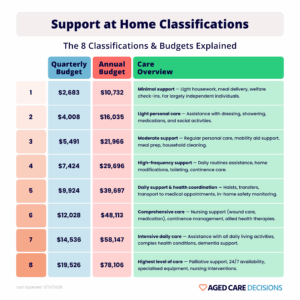
This new model introduces a more flexible and personalised approach to in-home aged care, with a clear, structured framework of eight care classifications. These classifications ensure older Australians receive the precise level of care needed to remain safe, independent, and well supported at home.

Learn how the Support at Home program can improve your in-home care experience! This government-funded program helps you live independently longer by offering various services like nursing care and everyday assistance.

Learn how the Support at Home program can improve your in-home care experience! This government-funded program helps you live independently longer by offering various services like nursing care and everyday assistance.

Learn how the Support at Home program can improve your in-home care experience! This government-funded program helps you live independently longer by offering various services like nursing care and everyday assistance.

Learn how the Support at Home program can improve your in-home care experience! This government-funded program helps you live independently longer by offering various services like nursing care and everyday assistance.

Learn how the Support at Home program can improve your in-home care experience! This government-funded program helps you live independently longer by offering various services like nursing care and everyday assistance.

Learn how the Support at Home program can improve your in-home care experience! This government-funded program helps you live independently longer by offering various services like nursing care and everyday assistance.

Learn how the Support at Home program can improve your in-home care experience! This government-funded program helps you live independently longer by offering various services like nursing care and everyday assistance.

Learn how the Support at Home program can improve your in-home care experience! This government-funded program helps you live independently longer by offering various services like nursing care and everyday assistance.

Learn how the Support at Home program can improve your in-home care experience! This government-funded program helps you live independently longer by offering various services like nursing care and everyday assistance.

Learn how the Support at Home program can improve your in-home care experience! This government-funded program helps you live independently longer by offering various services like nursing care and everyday assistance.

Learn how the Support at Home program can improve your in-home care experience! This government-funded program helps you live independently longer by offering various services like nursing care and everyday assistance.

Learn how the Support at Home program can improve your in-home care experience! This government-funded program helps you live independently longer by offering various services like nursing care and everyday assistance.

Learn how the Support at Home program can improve your in-home care experience! This government-funded program helps you live independently longer by offering various services like nursing care and everyday assistance.

Learn how the Support at Home program can improve your in-home care experience! This government-funded program helps you live independently longer by offering various services like nursing care and everyday assistance.

Aged care fees and charges change on 20 March and 20 September each year. Read our up-to-date summary of fees and charges for residential aged care and home care in Australia to find out what you may pay for aged care.

A Level 4 Home Care Package provides an annual budget of $62,013.50 to fund home care services and support to for eligible seniors.

A Level 3 Home Care Package provides an annual budget of $40,905.55 to fund home care services and support to for eligible seniors.

A Level 2 Home Care Package provides an annual budget of $18,793.85 to fund home care services and support to for eligible seniors.

A Level 1 Home Care Package provides an annual budget of $10,687.20 to fund basic home care services and support to for eligible seniors.

You can support an elderly person and help them to navigate My Aged Care by being appointed as their My Aged Care representative. Here’s how…

How can you get respite care for yourself or your loved one? Let’s look at how government-funded short-term residential respite

Caring for someone can be rewarding, but overwhelming at times. If you need some extra help, you may be able

What to consider when choosing a residential aged care facility (nursing home) for yourself or your loved one.

You can support an elderly person and help them to navigate My Aged Care by being appointed as their My Aged Care representative. Here’s how…

It is a common myth that older Australians must sell the family home to pay for aged care accommodation costs.
Let’s look at how residential aged care fees work, and the funding options that may be available for you.

Centrelink is a government agency that provides income support and other assistance to older Australians. Centrelink is part of Services

**From 1 November 2025, the Support at Home Program will replace the Home Care Package Program, introducing major changes to how home care is

In this handy Guide to discounts & supports for Australian seniors, we’ve listed the essential FREE and low-cost support services, discounts,

**From 1 November 2025, the Support at Home Program will replace the Home Care Package Program, introducing major changes to

**From 1 November 2025, the Support at Home Program will replace the Home Care Package Program, introducing major changes to how home care is

As more older Australians choose to live independently, government-funded aged care programs continue to evolve to meet their needs. For

If you or your loved one are currently receiving home care, but are not satisfied for any reason or are

Home Care Packages help thousands of Australians to live independently at home for longer, rather than move into residential aged

How to easily find and compare aged care near me in Melbourne, Sydney, Brisbane, Perth Australia

How to easily find and compare aged care near me in Melbourne, Sydney, Brisbane, Perth Australia

Starting the conversation about aged care can be confronting, confusing and emotional – particularly when your loved ones are reluctant

Duty of Care in Aged Care is the legal obligation to ensure an older person can live their life safely and free from harm.

Dementia can happen to anyone – but you can reduce your risk of getting it. Here are 10 ways you can reduce

Here’s everything you need to know about the voting assistance available for seniors in the upcoming Queensland 2024 State General

The Home Care Package Program was replaced by Support at Home on 1 November 2025, introducing major changes to how home care is delivered and managed.

**From 1 November 2025, the Support at Home Program will replace the Home Care Package Program, introducing major changes to how home care is

**From 1 November 2025, the Support at Home Program will replace the Home Care Package Program, introducing major changes to

Accessing short term respite care – from a few hours to a few weeks at a time – can make a significant

Need some tips about preparing for an ACAT assessment? Aged Care is complicated and can be a daunting experience for

On 5 June 2025, Department of Health, Disability and Ageing confirmed that Support at Home will commence on 1 November

Until recently, anyone entering aged care would need to pay a bond for their accommodation, just as tenants do when renting a home.
Today a Refundable Accommodation Deposit (RAD) is payable instead, at a price set by the facility.

How much does a nursing home cost? Many nursing homes (otherwise known as residential aged care facilities or aged care homes) are heavily supported by government funding. Read on to find out more about fees and charges for residential aged care.

From 9 December 2024, the ACAT (Aged Care Assessment Team) and RAS (Regional Assessment Service) systems were merged into a

**From 1 November 2025, the Support at Home Program will replace the Home Care Package Program, introducing major changes to how home care is

**From 1 November 2025, the Support at Home Program will replace the Home Care Package Program, introducing major changes to how home care is

My Aged Care is the government-run body that coordinates subsidised aged care services in Australia. This is the organisation you need

Did you know that the Australian Government funds short term care to help seniors recover after a hospital stay? Here’s

A need for aged care services can sneak up on you. An event such as a fall or unexpected illness

**From 1 November 2025, the Support at Home Program will replace the Home Care Package Program, introducing major changes to how home care is

In Australia, everyone can access aged care services, regardless of their financial situation. For those struggling to afford aged care, there are support options available.

From 9 December 2024, the ACAT (Aged Care Assessment Team) and RAS (Regional Assessment Service) systems were merged into a

**From 1 November 2025, the Support at Home Program will replace the Home Care Package Program, introducing major changes to how home care is

**From 1 November 2025, the Support at Home Program will replace the Home Care Package Program, introducing major changes to how home care is

The Commonwealth Home Support Program (CHSP) is a government subsidised program that provides in-home aged care services for older Australians.

**From 1 November 2025, the Support at Home Program will replace the Home Care Package Program, introducing major changes to how home care is

Federal funding for aged care services in Australia is coordinated by government organisation, My Aged Care. Wherever you are on

How much will you need to contribute towards your Support at Home package or residential aged care room?
Here is an introduction to My Aged Care’s Fee Estimator tool, and a summary of aged care costs in Australia.

“I feel so guilty but it’s time to get mum the help she needs.” Hey, guys, it’s Bianca Dye. My

**From 1 November 2025, the Support at Home Program will replace the Home Care Package Program, introducing major changes to how home care is

Aged care can be difficult to navigate – especially if you’re not even sure where to start! If you find

Aged Care Decisions is Australia’s largest Aged Care Placement Service. Our FREE service helps families find aged care vacancies, Home

To celebrate a decade spent driving positive change in aged care, Aged Care Decisions has unveiled a new visual brand

**From 1 November 2025, the Support at Home Program will replace the Home Care Package Program, introducing major changes to how home care is

**From 1 November 2025, the Support at Home Program will replace the Home Care Package Program, introducing major changes to how home care is

The Maximum Permissible Interest Rate (or MPIR) is a government-set interest rate that is used by residential aged care facilities to calculate a daily accommodation payment based on room price.
How does the MPIR affect the cost of aged care?

What is the difference between residential aged care and retirement living? Here’s an overview to help you decide which is best for you or your loved one.

**From 1 November 2025, the Support at Home Program will replace the Home Care Package Program, introducing major changes to how home care is

**From 1 November 2025, the Support at Home Program will replace the Home Care Package Program, introducing new ways to deliver and manage home

We’ve asked the experts about how you can make the transition into residential aged care as positive as possible for your loved one.

The Royal Commission into Aged Care, initially triggered by a two-part report on the ABC’s investigative program Four Corners, published

Moving to a new aged care facility is easier than you think. Every nursing home is unique – and it’s important to choose the right one for you.

Many Australians live with early signs of dementia, which can affect thinking, memory, brain function and behaviour. If you or

How to easily find and compare aged care near me in Melbourne, Sydney, Brisbane, Perth Australia

**From 1 November 2025, the Support at Home Program will replace the Home Care Package Program, introducing major changes to how home care is

**From 1 November 2025, the Support at Home Program will replace the Home Care Package Program, introducing major changes to how home care is

Residential respite care – a temporary stay in an aged care facility – has many benefits for both you and

**From 1 November 2025, the Support at Home Program will replace the Home Care Package Program, introducing major changes to how home care is

Find out how Home Care Packages work, and how you can get one. What is a Home Care Package? Home

This handy guide explains everything you need to know about the ACAT assessment process and how to apply for aged

A Home Care Package can assist you or your loved one to remain independent and receive the home care services

How to easily find and compare aged care near me in Melbourne, Sydney, Brisbane, Perth Australia

Understanding aged care fees and charges can be one of the most complicated aspects of navigating the aged care process.

How to easily find and compare aged care near me in Melbourne, Sydney, Brisbane, Perth Australia

**From 1 November 2025, the New Aged Care Act will introduce major changes to how residential aged care is delivered and managed. Please

**From 1 November 2025, the Support at Home Program will replace the Home Care Package Program, introducing major changes to how home care is

Ensuring elderly people are well cared for and receive the dignified treatment that they deserve is a priority in Australia.

To make sure that senior Australians maintain the rights and dignity they deserve when they are in care, the Australian

This article explains some of the key outcomes of the Royal Commission and shares details about the aged care reforms

Sometimes the biggest barrier to putting a loved one into a nursing home is the feeling of guilt. Here’s how

Federal funding for aged care services in Australia is coordinated by government organisation, My Aged Care. Wherever you are on

Elder abuse is an important issue for Australians to be aware of. If you suspect that you or a loved

Strokes can happen at any age but are particularly common in seniors. Find out about mini stroke symptoms in the

What is mandatory reporting in aged care? When planning for a loved one to transition into residential aged care, peace

What is the My Aged Care portal and how do you use it? Discover the answers so you can set

Did you know that Woolworths and Coles, Australia’s two major supermarket chains, offer priority home delivery services for seniors &

Depression is a serious issue in any age group, but it can be especially difficult to deal with when it

More than two-thirds of elderly Australians in residential care are living with dementia or experience some form of cognitive impairment.

Plan ahead with confidence. Learn how Advance Care Directives, guardianship and Enduring Power of Attorney help protect your health choices, finances and care preferences, so your wishes are respected if you can’t speak for yourself.


Technology is changing the world around us, and the aged care industry is no exception. New innovations make life safer

**From 1 November 2025, the New Aged Care Act will introduce major changes to how residential aged care is delivered and managed. Please

Learn about My Aged Care MAC My Aged Care Who is My Aged Care? My Aged Care is an Australian

Learn about Independent Living Units ILUs Independent Living Units What are ILUs? An independent living unit in a retirement village

**From 1 November 2025, the New Aged Care Act will introduce major changes to how residential aged care is delivered and managed. Please

Learn about CHSP CHSP Commonwealth Home Support Programme What is it? The Commonwealth Home Support Programme (CHSP) helps senior Australians

**From 1 November 2025, the New Aged Care Act will introduce major changes to how residential aged care is delivered and managed. Please

**From 1 November 2025, the New Aged Care Act will introduce major changes to how residential aged care is delivered and managed. Please

How can you know when a loved one is ready to move into an aged care facility? If they seem

When seniors in aged care regularly participate in some form of physical activity or exercise program, it can improve their

At Aged Care Decisions, we aim to make everyone’s aged care as stress free and timely as possible. That’s why

Respite care is when someone else temporarily cares for you or your loved one, instead of your normal carer. It
With the Support at Home Program now starting on 1 Nov 2025 and new out-of-pocket fees coming, now’s the perfect time to sign up with a provider and save on fees until 1 Nov or review your current one to ensure you’re getting the best support. Get your free list of providers and compare now.